






Renault Radiators
Radiators on these cars are plastic-tanked aluminium, and it is almost always the plastic that goes — a seam weeps, or the neck cracks where a hose clamps onto it. Stop-start traffic in a Durban or Johannesburg summer is exactly the duty cycle that finds it. A radiator that has been "sealed" with stop-leak is a radiator you do not want second-hand.
- Trade counter at 89 Chris Hani Road, Briardene
- Collect from the counter, or courier with the carriage in the quote
- Price, condition and fitment settled on a written quote
Radiators, explained
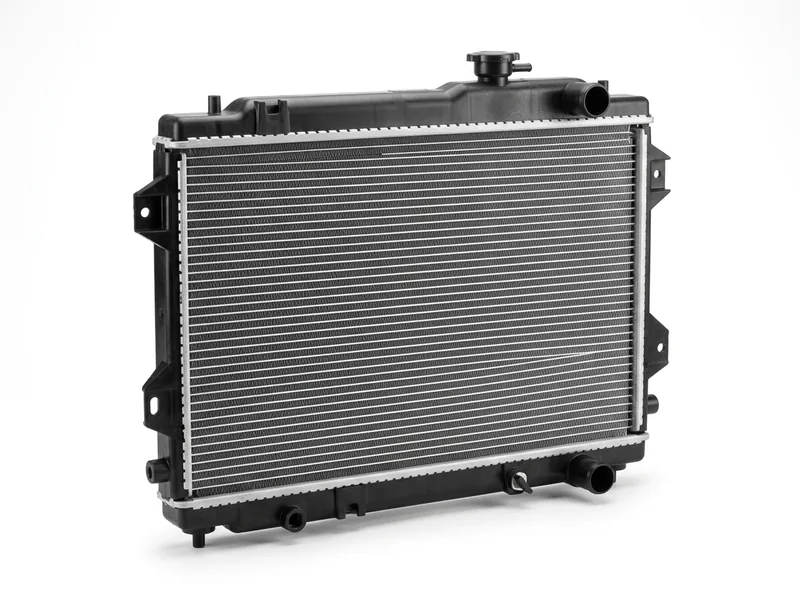
A modern radiator is an aluminium core with plastic end-tanks crimped onto it, and it is almost always the plastic and the crimp that fail rather than the core. Heat cycles the plastic thousands of times, it gets brittle, and eventually a tank cracks or a seam starts to weep — often at the neck where a hose clamps on, because that is where the stress concentrates.
There is a second way they die that has nothing to do with age. The radiator sits at the very front of the car with nothing but a grille in front of it, so it takes every stone, every insect and every plastic bag off the highway. A core packed solid with debris cannot shed heat no matter how good the coolant is, and a stone through a fin does not always leak immediately.
When you are looking at a used radiator
When you are looking at a used radiator, two things are worth more than the seller's description. First, the condition of the plastic tanks and the necks — cracks and stress marks are visible if you look. Second, whether anyone has ever put stop-leak into it, because a radiator sealed chemically has a partly blocked core and will be someone else's problem soon enough.
And before you buy at all: a radiator that failed because the fan stopped working is a radiator that will fail again if you only replace the radiator.
How you know radiators are on the way out
Recognise any of that? Tell us the model and year and we will go and check what we can get hold of for you.
The questions we ask before we price radiators
- What you are really deciding
- Whether you are replacing what leaked, or what made it leak.
- Where Renault differs
- This range has one documented cooling weakness and it is worth knowing before you order anything. cars.co.za reports that the plastic thermostat housing on three-cylinder models tends to warp over time — generally past 100 000 km on the Clio IV — and leak coolant, and its Sandero guide reports the same thing. A leak at the top hose on one of these cars is often the housing rather than the hose.
- Where the car was built
Renault does not build its South African range in one place, and that decides which supply chain a part comes down. The Triber is Indian-made, on a modified CMF-A platform, and the Kwid and Kiger come off the same Indian industrial base. The Sandero was imported from Romania, and every SA-spec second-generation Duster was built at Dacia's Mioveni plant there. The first-generation Captur sold here came from Renault's Valladolid factory in Spain.
It can show up in the metal, too: the first-generation Duster switched from Indian to Romanian production partway through its life, and cars.co.za observed that the Romanian-built cars appear to have benefitted from better rust-proofing and paint quality.
- What to send us
- The engine, the mileage, and where you can actually see coolant. With that in front of us we can normally settle the right radiators without a back-and-forth.


Further reading on radiators
Independent sources, not ours. Worth a look if you want the background before you enquire.
Radiators — what customers usually ask
How much does a radiator cost to replace in South Africa?
We quote per enquiry rather than publishing a figure, because the number swings on things we cannot know until you tell us: the model, whether the car has aircon (which changes the whole front-end assembly), whether it is a manual or an automatic with an oil cooler in the tank, and whether you are after a used unit or a new aftermarket one. Fitting is usually a straightforward job, so the part is most of the cost. Send us the VIN for a real number.
Is it worth fixing a car radiator?
Sometimes. A radiator specialist can re-crimp a tank or repair a core, and on an older car that is often the sensible economics. Where repair stops making sense is when the plastic has gone brittle generally — fixing one crack in a tank that is failing everywhere buys you weeks. Ask the repairer to tell you honestly which situation yours is. They usually will.
Can I use a radiator sealant instead?
To get home, and only to get home. Stop-leak products work by depositing material where coolant is escaping, and they cannot tell the difference between a crack and a narrow coolant passage — so they also deposit material in the heater core and the tight parts of the radiator. Plenty of blocked heater cores started life as a sealed radiator. Use it as a get-you-home measure and then flush the system properly.
Is a used radiator a sensible buy?
It can be, particularly off a low-mileage accident-damaged donor, and for older cars where new stock is scarce it is sometimes the only route. Inspect it in person if you can: look at the tanks and the necks for cracks, look through the core for blockage and bent fins, and ask whether it was pressure-tested. A radiator that has been sitting outside in a yard for two years is a different proposition from one pulled last week.
Why did my new radiator fail so quickly?
Usually because the thing that killed the first one is still fitted. A cooling fan that is not switching on, a thermostat stuck closed, a failing water pump or a leaking head gasket pressurising the system will all destroy a radiator, and none of them are cured by replacing the radiator. If yours has gone twice, stop replacing it and get the system tested properly.