







Renault Radiator Hoses
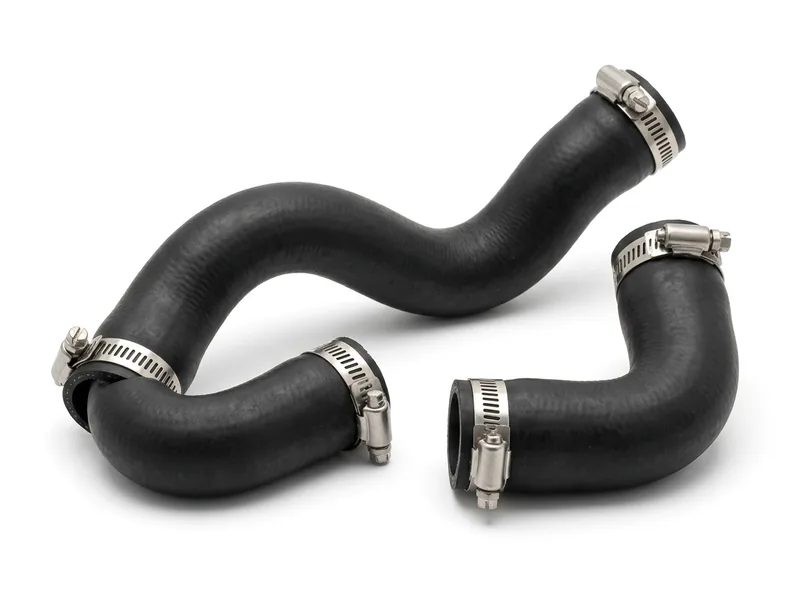
Hoses are cheap and the things they connect to are not, which is why this is worth reading. On the three-cylinder Renaults the plastic thermostat housing the top hose bolts to is a known warping point, so a "hose leak" is often a housing leak. On the second-generation Duster, cars.co.za flags a clip on the intercooler-to-throttle-body hose that fails early.
- Trade counter at 89 Chris Hani Road, Briardene
- Collect from the counter, or courier with the carriage in the quote
- Price, condition and fitment settled on a written quote
Radiator Hoses, explained
Here is the useful thing about hoses on these cars, and it may save you buying the wrong part: on the three-cylinder Renaults, a leak at the top hose is quite often not the hose.
The plastic thermostat housing
The plastic thermostat housing the top hose connects to is the component the South African press actually documents as failing. cars.co.za reports it warping over time on three-cylinder models — generally past 100 000 km on the Clio IV — and leaking coolant. Coolant appearing around the top hose connection therefore has two candidates, and the cheaper-looking one is not always the right one. Replace the hose, leave the housing, and you will be back.
There is a second hose worth knowing about on the diesel Dusters
There is a second hose worth knowing about on the diesel Dusters, and it is not a coolant hose at all. cars.co.za notes that a clip attaching the hose running from the intercooler to the throttle body is known to fail prematurely, and says the problem appears to have been inherited from first-generation cars. That is a trivially cheap part with a dramatic symptom — a sudden loss of boost and often limp mode — and it gets misdiagnosed as a turbo more often than it should.
We have deliberately not written a line here about Renault hose materials or a Renault-specific hose failure pattern. We looked, and we did not find a source supporting one.
How you know radiator hoses are on the way out
Recognise any of that? Tell us the model and year and we will go and check what we can get hold of for you.
The questions we ask before we price radiator hoses
Strip away the catalogue language and what you are actually choosing between here is whether you are replacing what leaked, or what made it leak.
This range has one documented cooling weakness and it is worth knowing before you order anything. cars.co.za reports that the plastic thermostat housing on three-cylinder models tends to warp over time — generally past 100 000 km on the Clio IV — and leak coolant, and its Sandero guide reports the same thing. A leak at the top hose on one of these cars is often the housing rather than the hose.
So we price radiator hoses against your specific car, not against a badge. Send through the engine, the mileage, and where you can actually see coolant, and we will come back to you on what fits , what it will cost, and how soon we can have it moving.


Further reading on radiator hoses
Independent sources, not ours. Worth a look if you want the background before you enquire.
Radiator Hoses — what customers usually ask
What is the most common coolant hose failure?
Degradation at the ends, where the hose is clamped and where it runs hottest. Rubber hardens with heat cycling, loses its ability to seal against the stub, and starts weeping under pressure. Which is why the classic check is to squeeze a cold hose: healthy rubber is firm and springy, a hose that feels mushy or crackles is past it. On the three-cylinder Renaults, check the plastic thermostat housing at the same time — it is the documented failure on this range.
Can I drive with a leaking radiator hose?
Not sensibly. A weeping hose is a burst hose that has not happened yet, and when one lets go it dumps the coolant in seconds — usually with no warning beyond a temperature needle that is already past the point at which damage starts. Hoses are among the cheapest parts on a car and an overheated cylinder head is among the more expensive. The maths is not close.
How long should a radiator hose last?
We have not found a manufacturer figure for these models and we are not going to invent one, because it depends far more on heat cycles and climate than on years. What is worth doing is checking them by hand whenever the bonnet is open: squeeze each hose cold and feel for firmness. If they are soft, hard, cracked or crunchy, replace them regardless of how old the paperwork says they are.
How expensive is it to fix a radiator hose?
It is one of the cheaper repairs on a car, which is exactly why it is worth doing before it fails rather than after. We quote per part rather than publishing a figure. If the leak turns out to be the thermostat housing rather than the hose, that is a different part and a different number, which is why we would rather know what is actually leaking before quoting you.
Should I replace all the hoses at once?
If one has failed from age and the others are the same age, generally yes. They have been through the same heat cycles and one failing is a fair indication of the state of the rest. It also means the system is drained and refilled once rather than three times, which is where the labour cost actually sits.