







Renault Alternators
The classic mistake is replacing a battery when the alternator is the problem, or the other way round. A dashboard battery light that comes on while driving is a charging fault, not a flat battery — and a car that starts fine on a jump but dies again once the leads come off is telling you the same thing. Test before you buy either.
- Trade counter at 89 Chris Hani Road, Briardene
- Collect from the counter, or courier with the carriage in the quote
- Price, condition and fitment settled on a written quote
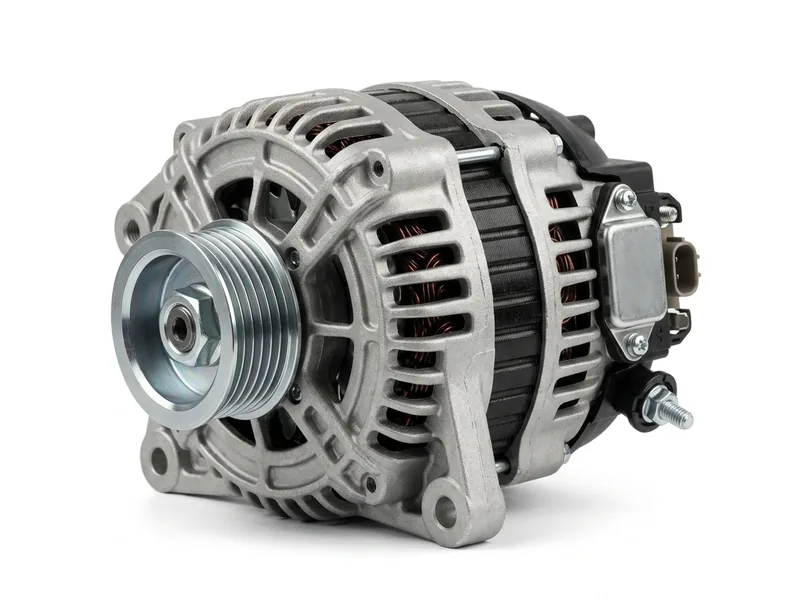
Alternators, explained
The alternator is the part most often replaced when the problem was something else, and the part most often ignored when it really is the problem. Both mistakes come from the same confusion with the battery.
The distinction is simple once you know it. A battery starts the car. An alternator runs the car and recharges the battery once it is running. So a car that will not start but drives fine after a jump has a battery problem. A car that starts on a jump and then dies again as soon as the leads come off has a charging problem. A red battery-shaped warning light that comes on while you are driving is a charging light, not a low-battery light, and it means the alternator has stopped keeping up.
Not every charging fault is the alternator itself
Not every charging fault is the alternator itself, either. UK coverage of the Clio notes that a persistent squeak or chirping from the engine area can point to the alternator pulley wearing out — and on many modern cars that pulley is a one-way clutch device that fails independently of the alternator behind it. A wiring fault or a poor earth produces the same dashboard light as a dead alternator at a fraction of the cost, which is why measuring beats replacing.
Used alternators are one of the better second-hand buys on a car
Used alternators are one of the better second-hand buys on a car: they are direct-fit, they need no coding, and a unit off a low-mileage accident-damaged car is usually barely worn.
How you know alternators are on the way out
Recognise any of that? Tell us the model and year and we will go and check what we can get hold of for you.
The questions we ask before we price alternators
Strip away the catalogue language and what you are actually choosing between here is whether the part you need is genuinely plug-and-play or has to be coded to your car.
Alternators, starters, batteries, motors and switches go straight on. Anything carrying the car's identity does not — which is why South African sellers list Renault ECUs two ways, as a bare computer box or as a complete set with the key and immobiliser, and price them as two different products. That split is the clearest evidence available that the box is paired to the car it came out of.
So we price alternators against your specific car, not against a badge. Send through the VIN, and whether your workshop can code a unit to the car, and we will come back to you on what fits , what it will cost, and how soon we can have it moving.


Further reading on alternators
Independent sources, not ours. Worth a look if you want the background before you enquire.
Alternators — what customers usually ask
How do you know if your alternator is bad?
The reliable test takes a multimeter and two minutes. With the engine off, a healthy battery reads somewhere around 12.6 volts. Start the engine and the reading should climb — that rise is the alternator charging. If the voltage stays the same or drops with the engine running, it is not charging. Any auto-electrician or fitment centre will do this free of charge, and it settles the battery-versus-alternator argument on the spot.
Do alternators just fail suddenly?
Sometimes, but usually there is warning if you know what to listen for. Bearings tend to get noisy first. Brushes and the voltage regulator often give intermittent trouble before they give up entirely — lights that flicker, a warning light that appears and clears. The sudden failures are more often a snapped belt or a broken wire than the alternator itself dying without notice.
What is the most common alternator fault?
Worn brushes and a failing voltage regulator account for a large share, and on many units the regulator is a separately replaceable part rather than a reason to bin the alternator. Bearings are next, announcing themselves with a whine. And the pulley: on cars fitted with a one-way clutch pulley, that component can fail on its own and produce a chirp or squeak while the alternator underneath is perfectly healthy.
Is it the battery or the alternator?
Jump-start the car and then remove the leads. If it keeps running, the alternator is charging and the battery is your problem. If it dies within a minute or two, the alternator is not charging. That test costs nothing and is right most of the time. Have it confirmed with a voltmeter before you buy anything.
Can an alternator be repaired instead of replaced?
Very often. Brushes, a voltage regulator, bearings and the pulley are all serviceable items, and a rewinder can usually tell you within an hour whether yours is worth doing. If the windings themselves are burnt it is a different story. It is worth getting that opinion before ordering a replacement unit.